
English| EUR
Suggested for you
More currencies
Choose a language
Few visitors arrive in Yushima expecting temperature to redraw a sake's character, yet it does. This how to taste sake guide explains what the polishing ratio on a label signals, why aroma reads differently from a stemmed glass than from an ochoko, and how nihonshu tasting works at a free-entry counter in Bunkyo City. The mechanics follow in the sections below.
Quick answer
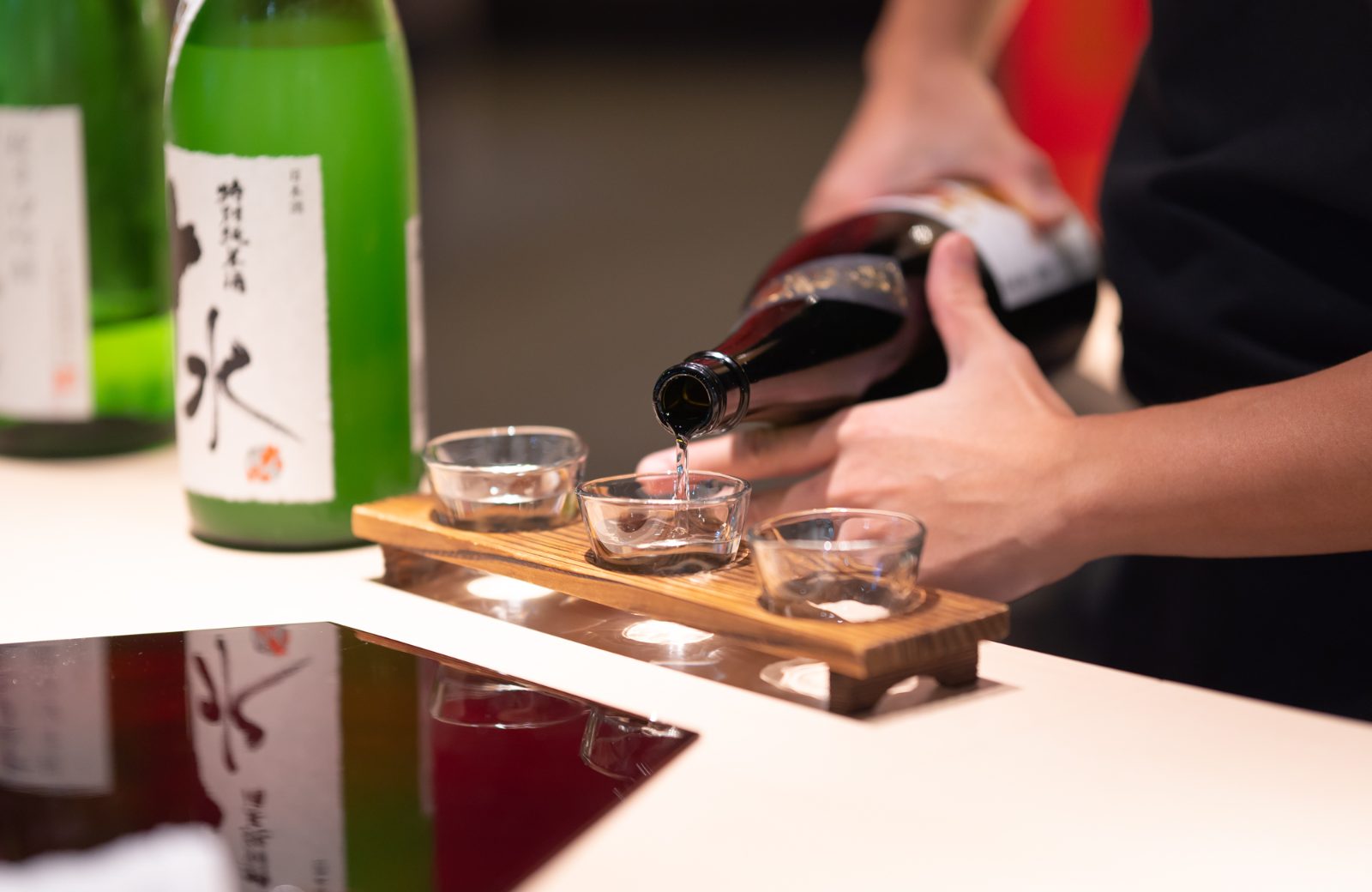
Tasting sake comes down to four moves: look at the liquid, swirl, inhale, then sip and let it cross the whole tongue. Entry at the Yushima counter in Bunkyo City is 0 JPY, with payment per tasting or drink, so the sequence costs only what is poured. Closed Mondays; doors open at 12:00 daily otherwise.
A daiginjo begins with rice that has lost half its mass. Brewers mill the outer layers away, leaving a starch core, because the proteins and fats near the husk pull aroma toward heaviness. The discarded bran is not wasted: it goes into pickling beds, crackers and cosmetics. That single number — the polishing ratio, or seimaibuai, printed on most labels — says more about a bottle than any marketing line. Learning how to taste sake starts with reading it. The drink resists habits travellers bring from wine. Sake carries no tannin, modest acidity, and an umami weight that comes from koji mould converting starch into sugar. Temperature holds the most leverage: the same junmai can read lean and mineral when chilled, round and savoury when warmed toward body heat. Vessel matters too. A wide sakazuki spreads aroma thin, a stemmed glass concentrates it, and the small ochoko poured from a tokkuri is about rhythm and company rather than analysis. None of this is difficult, only unfamiliar, which is why structured nihonshu tasting lands better than a bottle chosen at random in an izakaya. Tokyo makes the lesson easy to arrange. The counter at Lions Plaza Ochanomizu, a short walk from Yushima Tenjin shrine in Bunkyo City, pours by the glass rather than the bottle, so comparison carries little risk. Flights generally move from light to heavy: a crisp honjozo before a kimoto, a nama before an aged kijoshu, because the palate does not travel backwards well. Autumn adds hiyaoroshi to the list — sake pressed in spring, matured through summer and released unpasteurised once the weather cools. Staff will name the brewmaster, the toji, and the prefecture behind each pour when asked. Visitors planning a Tokyo sake tasting tour can treat this page as the frame and the sections below as the mechanics: the weekly schedule, what a session costs, the route from the station, and the small courtesies that keep a counter running. The working answer to how to taste sake is to put two glasses side by side and name the difference out loud. Polishing ratios, yeast strains and prefecture maps become legible after that, and the labels in any Tokyo bottle shop stop looking like code.
“The working answer is simpler than the vocabulary: pour two glasses, taste them side by side, and name the difference.”
This six-step sequence takes a single pour from glass to considered verdict, and runs about five to ten minutes per sake. Work through it once with a dry junmai and the same method carries across every bottle on the list.
Tilt the sake against a white surface or pale wall and look for clarity, viscosity and tint, which ranges from near-colourless to faint gold or green. Most visitors skip straight to drinking and miss haze or heavy legs, the first clue to an aged or undiluted sake.
Give the glass one slow rotation and bring it just under your nose, naming what you find: melon, banana and anise point to ginjo yeasts, while steamed rice, mushroom and nuts suggest kimoto or aged styles. Deep sniffing floods the nose with alcohol and flattens everything, so keep it short and repeat instead.
Draw in roughly a teaspoon and let it coat the whole tongue before swallowing. People commit to a full mouthful immediately, which saturates the palate and makes the second and third sake taste muted.
On the second sip, pull a thin stream of air through your lips while the sake sits mid-tongue to lift the aroma into the back of the nose. Done too hard it stings, so aim for a quiet, steady intake.
Track where each lands: sweetness up front, acidity along the sides, umami as a broad savoury weight. Many readers label everything simply dry or sweet and lose the acidity that actually drives the finish.
Time how long the flavour holds after swallowing, from a clipped few seconds to a lingering minute, and note whether it ends clean or tacky. Rinse with water and pause before the next pour, since back-to-back tasting carries the previous sake into the new one.
Write the brewery name, rice polishing figure and your own two-word impression while the glass is still in front of you. Memory blurs after three or four samples, and without notes the comparison that makes tasting worthwhile disappears.
The facility is open Tuesday through Sunday for visitors interested in sake tasting. Please note that the location remains closed on Mondays.
Visitors encounter a straightforward pay-per-drink model when tasting sake, as there are no flat admission charges required for entry. Costs are determined entirely by your individual selection of sake samples.
Verdict: A typical adult pays only for the specific sake servings they choose to sample, with the total cost fluctuating based on the quantity and premium nature of the selected drinks.
The venue is located at Lions Plaza Ochanomizu 1F, 1-2-12, Yushima, Bunkyo City, providing accessible entry via Tokyo's major rail and metro networks. The most direct approach is by walking from nearby stations in the Ochanomizu or Yushima areas.
JR Chuo-Sobu Line to Ochanomizu Station
Tokyo Metro Chiyoda Line to Yushima Station
Tokyo Metro Marunouchi Line to Ochanomizu Station
Navigate toward the Yushima area and use the Lions Plaza Ochanomizu street-level entrance. Refer to the official site at https://nihonshu.com/ or contact +81-3-5207-2420 for specific building access details.
For those seeking to focus on the nuances of sake, the best arrival window is 12:00–19:00. Arriving during these hours helps avoid peak evening crowds and ensures ample time for tasting selections before last orders.
Mild, 12°C–20°C; pleasant for walking.
The moderate weather makes it ideal for exploring local sake culture. Early arrivals benefit from quieter tasting periods.
Cool, 15°C–22°C; very comfortable.
Crisp air complements the refined tasting experience. Mid-week visits during this time offer a balanced atmosphere.
—
Visiting between 12:00 and 19:00 on weekdays provides the most personal attention from staff. This timing allows for a deliberate and unhurried exploration of various sake profiles.
Verdict: The best time to visit is Tuesday to Thursday between 12:00 and 19:00, particularly during the mild months of April or October.
A Tokyo tasting room runs on quiet attention, and staff pour for several guests at once. Small courtesies keep the counter calm and the sake showing at its best.
Everything you need to know about how to taste sake
To learn how to taste sake, observe the clarity, smell the aromatic profile, and take a small sip to evaluate the texture and umami levels. Our location provides an authentic environment where you can refine your palate using traditional professional tasting techniques. Many visitors find that comparing different rice polishing ratios is the most effective method to understand the nuances of the craft. Proper education on how to taste sake helps in appreciating the complexity of various regional Japanese brews.
Best Sake Tasting Bars in Tokyo
Read more Tickets & toursSake Tasting in Shibuya
Read more Tickets & toursTokyo Sake Brewery Tours
Read more GuideWhat Does Sake Taste Like?
Read more Tickets & toursPrivate Sake Tasting Experiences
Read more GuideBringing Sake Home: Customs and Tips
Read more Tickets & toursSake Tasting in Shinjuku
Read more