
English| EUR
Suggested for you
More currencies
Choose a language
Visitors who spend an afternoon comparing junmai and daiginjo in Yushima tend to leave with the same question, and it is rarely about flavour. Taking sake home from Japan answers to three separate rulebooks: the airline's, Japanese customs, and the arrival country's. This page sets out which one actually binds a bottle of nihonshu (日本酒) bought in Tokyo, and how to time the shopping.
Quick answer
Yes. Sake sits at roughly 15% alcohol, below the 24% threshold airlines treat as restricted, so sealed bottles travel home in checked baggage. Carry-on is the exception: liquids over 100 ml must be bought airside. Duty-free allowances differ by destination country, so confirm yours before buying. Free entry at the Yushima tasting room, 12:00–20:30 Tuesday to Thursday, makes comparing styles first straightforward.
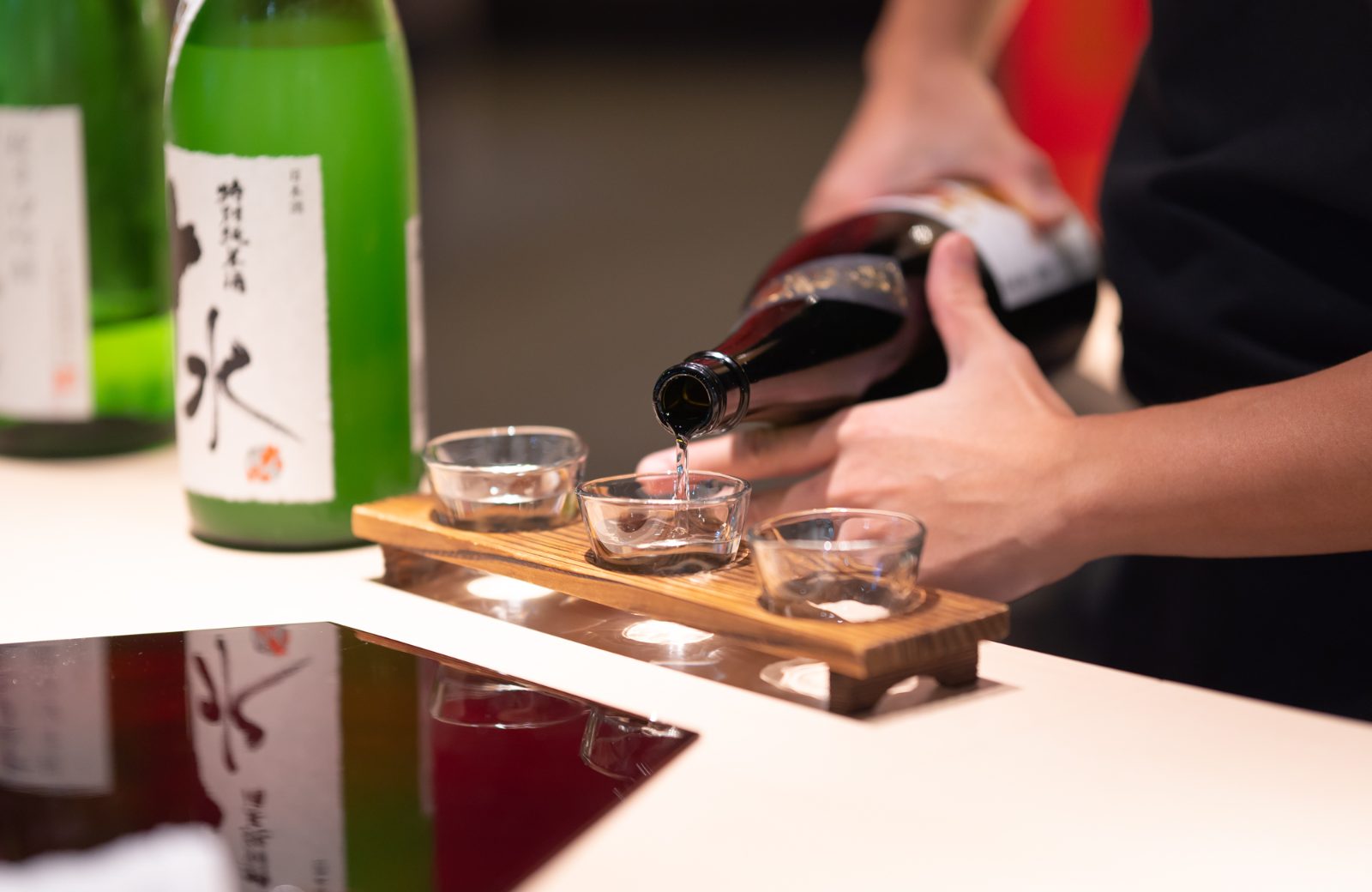
Japan licenses roughly 1,200 sake breweries, and a large share of them never ship a bottle outside their home prefecture. That arithmetic shapes every conversation at the counter in Yushima, where visitors sample a junmai from Niigata or a daiginjo from Hyogo and then ask the obvious thing: "can you bring sake back from japan?" The answer is yes, and the real work is deciding which bottles are worth the suitcase space. Three separate authorities have a say, and they rarely overlap. Airlines care about alcohol strength and whether the bottle rides in the hold. Japanese customs care very little about departing bottles. The arrival country cares about volume and value, and its allowance is the one that costs money if ignored. Bottle format matters too. Sake is sold mainly in the 720 ml yongōbin and the 1.8 litre isshōbin, and a single isshōbin eats most of a modest duty-free allowance on its own. Smaller 300 ml bottles and one-cup tins exist for exactly this reason. Taking sake home from Japan is therefore less a legal question than an inventory one. This is where a tasting session earns its keep. The Yushima tasting room, run by the industry's information centre, pours nihonshu (日本酒) by the glass and in comparison sets, which lets a visitor test a polishing ratio against a sake meter value before committing to anything. Staff can name the kura, the prefecture and the rice variety. Unpasteurised namazake, which needs refrigeration, is easy to identify and easier to rule out. Pasteurised junmai and honjozo travel without drama. The sensible sequence is tasting first, shopping last. A visitor who maps preferences during an afternoon of sake tasting in Tokyo can buy near the end of the trip rather than hauling glass around Honshu. Note brewery names in a phone. Compare them against what is actually stocked at home, because scarcity is the point. Approached that way, "can you bring sake back from japan" stops being a logistics worry and becomes a shortlist. The Yushima counter is the cheapest place to build that list. Bottles bought there and elsewhere all answer to the same arrival-country allowance, so the choosing matters more than the carrying.
“Taste first, shop last — the suitcase question is really a shortlist question.”
Navigating international transport of sake requires attention to airline packing security and your home country's specific import allowances.
Verify your home country's customs website for specific duty-free alcohol allowances, as these vary significantly by nationality and destination. Exceeding these limits typically requires you to declare the items and pay applicable duties upon arrival.
Wrap bottles in padded, leak-proof wine shipping bags before placing them in your checked luggage. These sleeves provide a secondary seal if a bottle breaks and add necessary cushion against impact.
Position sake bottles in the very center of your suitcase, surrounded by at least three inches of thick clothing on all sides. This creates a protective buffer that absorbs shocks during baggage handling.
Do not attempt to pack sake in carry-on luggage if the volume exceeds 100ml, as it will be confiscated at security. Sake must be transported in checked baggage to comply with international aviation liquid restrictions.
Place a fragile sticker on your suitcase, though note that this does not guarantee gentle handling. Rely primarily on your internal protective packing rather than external baggage labels.
Consider purchasing bottles at the airport duty-free shop after passing security if you prefer not to manage packing fragile glass in checked bags. Note that these bottles must remain sealed until you reach your final destination.
The facility is open Tuesday through Sunday, with extended evening hours on Friday and Saturday.
Entry to the facility is free, allowing visitors to explore the space and browse selections without an upfront charge. Costs are incurred only when selecting specific beverages for consumption.
Verdict: A typical visitor pays 0 JPY for entry and chooses their own budget based on the quantity and premium nature of the sake they select to taste.
The venue is located at Lions Plaza Ochanomizu 1F, 1-2-12, Yushima, Bunkyo City, Tokyo, 113-0034, Japan. The most efficient way to reach us is by utilizing the Tokyo Metro network.
Tokyo Metro Chiyoda Line to Yushima Station
Tokyo Metro Marunouchi Line to Hongo-sanchome Station
JR Chuo-Sobu Line to Ochanomizu Station
Arrive between 12:00–18:00 to avoid evening crowds and ensure ample time for guided tasting comparisons.
The best time to visit for sake tasting is between 12:00 and 18:00. Arriving during this window helps you avoid evening crowds and ensures ample time for a relaxed, guided tasting experience.
—
Visiting Tuesday through Thursday allows for a more personal interaction with the staff. Mid-week periods typically see fewer visitors than Friday or Saturday evenings.
Mild, 10°C to 20°C
Spring brings many travelers to Tokyo, resulting in higher foot traffic. Tasting sessions during this month should be planned for the early afternoon to secure space.
Cool, 15°C to 22°C
October offers comfortable temperatures for exploring the city before your tasting. Weekday visits during this month balance pleasant weather with manageable crowd levels.
Verdict: The best time to visit is Tuesday to Thursday between 12:00 and 18:00, particularly during the mild months of April or October.
Everything you need to know about can you bring sake back from japan
Travelers are generally permitted to bring alcohol back to their home country for personal use, though you must adhere to your specific nation's import volume regulations. Checking your local customs agency's guidelines is the best way to determine if you can bring sake back from japan without issue.
Most international airlines categorize sake as alcoholic beverage cargo, requiring it to be packed in checked luggage rather than carry-on bags. Ensuring bottles are sealed and wrapped in protective material helps prevent breakage during transit when you decide, can you bring sake back from japan.
While many premium breweries and shops offer shipping services, these are subject to international courier regulations and specific destination laws. It is wise to inquire about shipping feasibility during your visit, especially if you wonder can you bring sake back from japan as a gift.
Always use bubble wrap or padded wine sleeves for your glass containers inside a hardshell suitcase to ensure they survive the journey. Professional packing materials are often available at specialty stores or convenience shops in Tokyo to assist travelers.
You are typically required to declare all alcoholic beverages to customs officials upon arrival in your home country. Failure to disclose these items can lead to fines or confiscation, regardless of whether you have exceeded duty-free exemptions.
Importing alcohol is strictly prohibited for individuals who have not reached the legal drinking age in their destination country. Even if an adult purchases the item, the recipient or carrier must comply with age-related customs statutes.
Each country has its own duty-free allowance, which dictates how much alcohol you can bring into the country tax-free. Exceeding these limits usually results in the payment of additional taxes or duties at the border.
Best Sake Tasting Bars in Tokyo
Read more Tickets & toursSake Tasting in Shibuya
Read more Tickets & toursTokyo Sake Brewery Tours
Read more GuideWhat Does Sake Taste Like?
Read more Tickets & toursPrivate Sake Tasting Experiences
Read more Tickets & toursSake Tasting in Shinjuku
Read more GuideHow to Taste Sake: A Beginner's Guide
Read more